Collect Files Online from Anyone (Simple Method)
A simple and reliable way to collect files online from anyone without logins, shared folders, or email attachments.
Collecting files online should be easy. But in practice, it often turns into a messy process filled with permission requests, login issues, and email attachments that exceed size limits. If you work with clients, students, or collaborators, these small obstacles quickly slow everything down.
With a Google Drive file request page, the owner connects Google and shares an upload link. Guests can submit in their browser without a Google account, subject to the page’s access and file rules.
Why Collecting Files Online Is Still Frustrating
Many common file collection methods were not designed for external users.
Some typical problems include:
- Shared folders require access approvals
- Email attachments fail for large files
- Uploaders need a Google account
- Files arrive scattered and unorganized
The more steps people have to take, the less likely they are to complete the upload.
What a Simple Online File Collection Looks Like
A better approach removes friction from the process entirely.
To collect files online smoothly, you need:
- A single upload link
- No login required for uploaders
- Clear separation between uploaders and your storage
- File organization based on the rules you configure
Instead of sharing access to your Drive, you let people upload files through a controlled page.
How to Collect Files Online Without Logins
Create an Upload Page
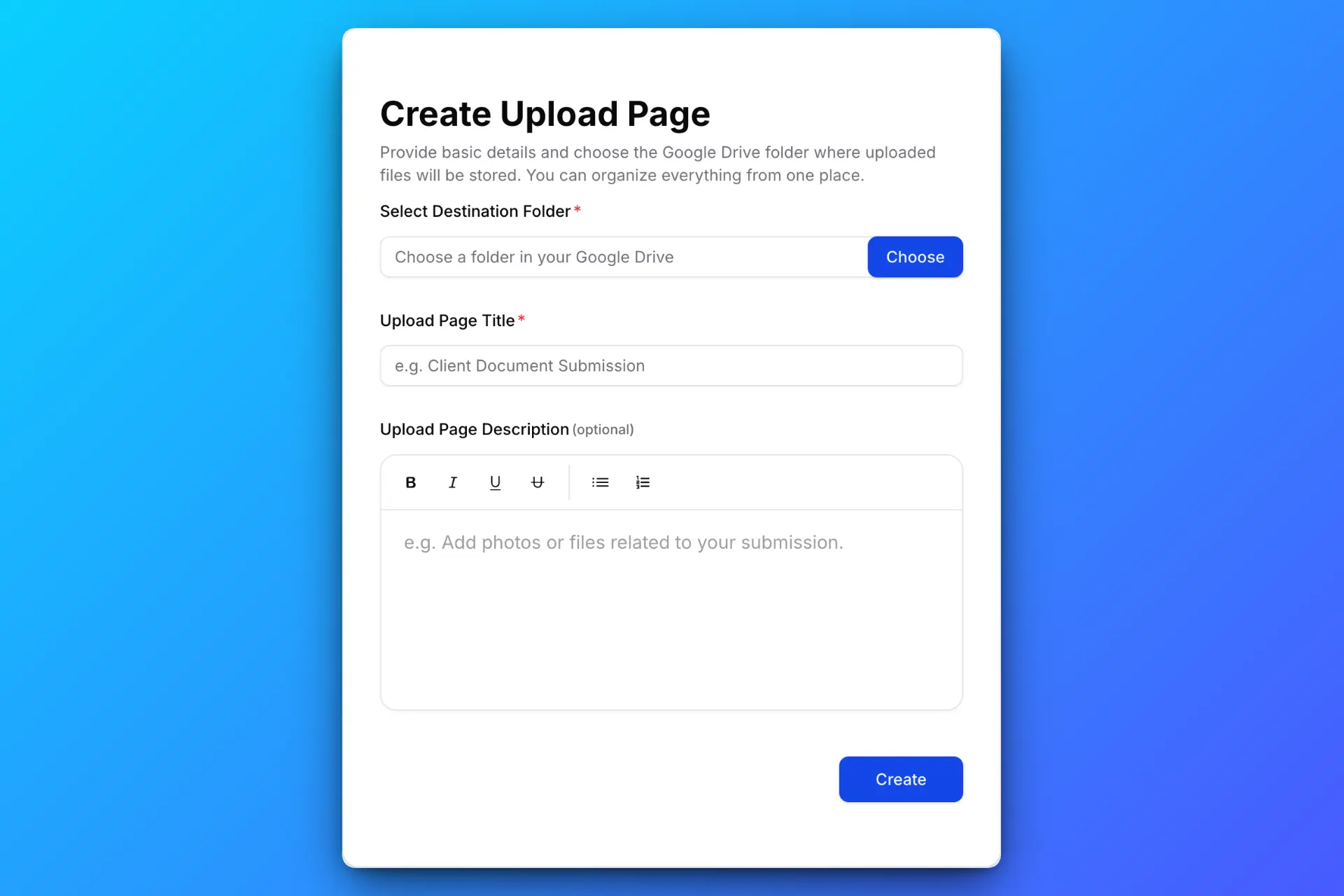
Start by creating an upload page. Choose a title and description, select the destination folder in your Google Drive, and set basic rules such as file size limits or an expiration date. Once published, you get a unique upload link.
Share the Upload Link Anywhere

Send the link via email, chat apps, or embed it on your website. Uploaders don’t need a Google account and can upload files from any device.
Let Anyone Upload Files Easily
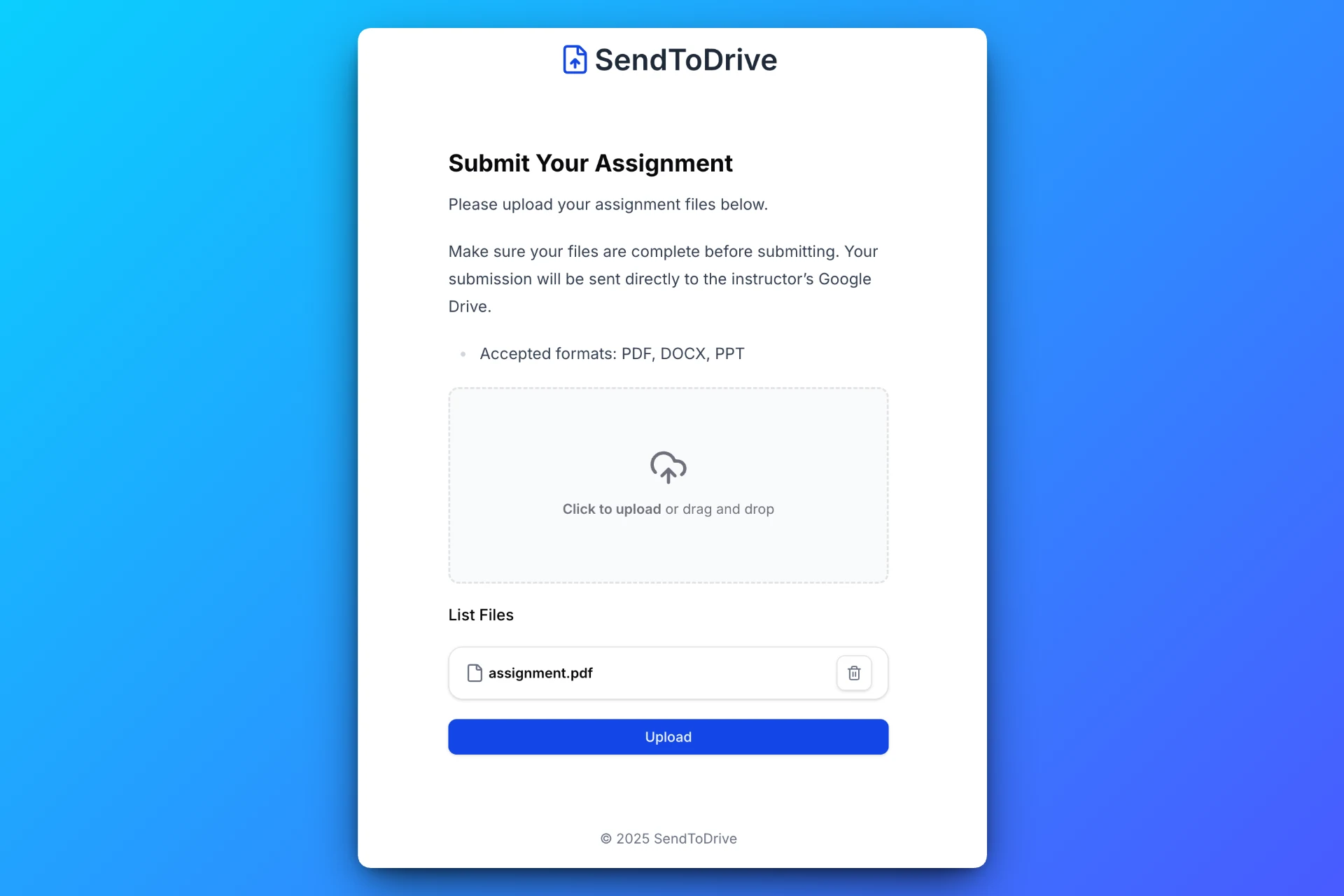
The upload interface is simple and focused. Users can drag and drop files without seeing your Drive or requesting access.
Receive Files Directly in Google Drive
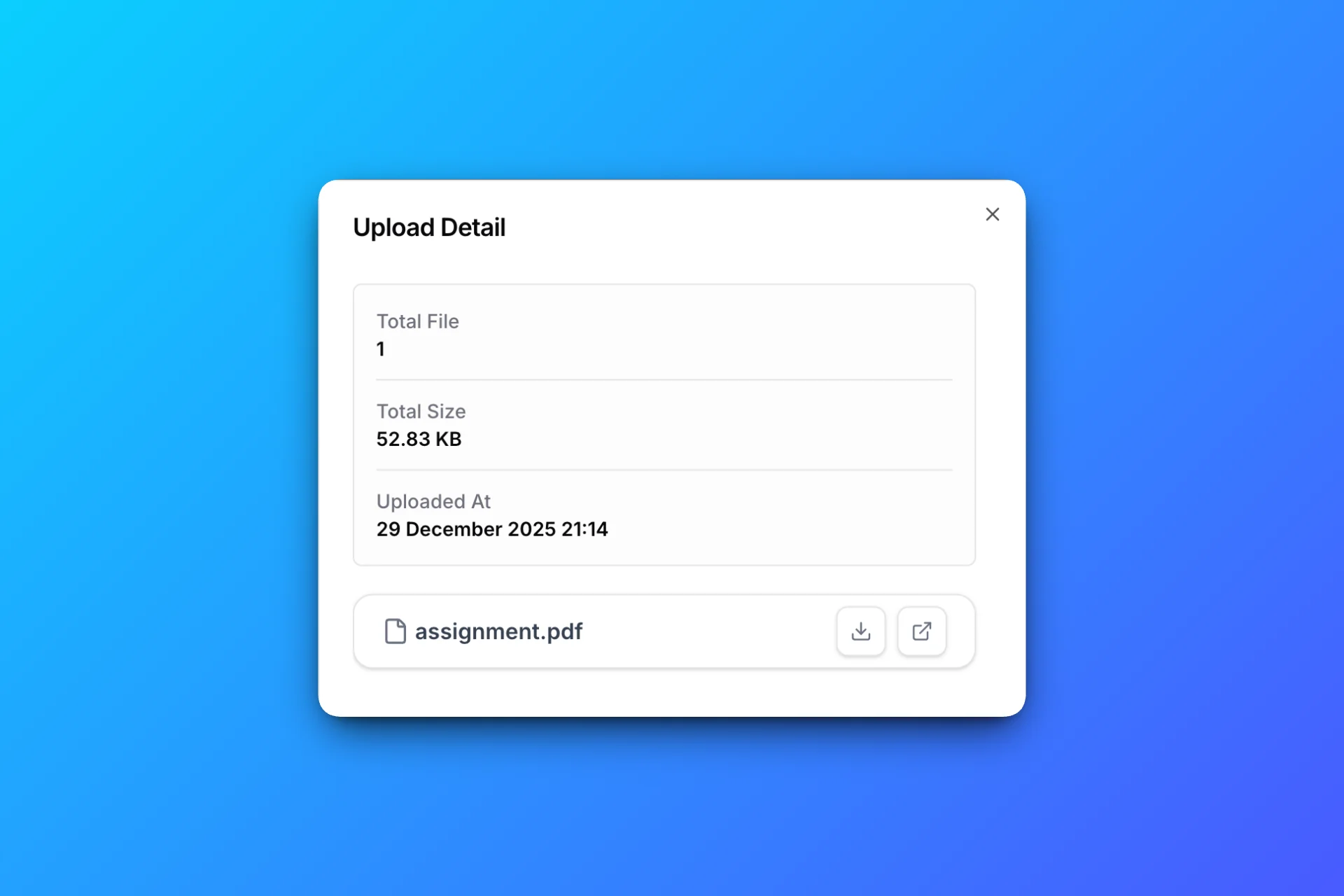
All uploaded files are saved automatically to your selected Google Drive folder, organized and ready to use.
When This Method Works Best
Real Estate
Real estate agents often collect contracts, ID documents, and property photos from clients. Using an upload link makes it easier for clients to submit files without dealing with Drive permissions or email limits.
Creatives
Designers, videographers, and content creators regularly exchange large files like images, videos, and design assets. Collecting files online via a link keeps everything organized and avoids failed uploads.
HR Teams
HR departments collect resumes, portfolios, and onboarding documents from many candidates. A single upload link simplifies submissions and prevents inbox overload.
A Practical Way to Collect Files Online
SendToDrive is designed to make online file collection simple and reliable. It allows you to collect files online without sharing folders, managing permissions, or building custom upload systems.
Files go directly into your Google Drive, while guests use an upload page.
Choosing between tools? Compare SendToDrive and DriveUploader’s form modes, features, and pricing before deciding which fits your collection workflow.
Frequently Asked Questions
Do people need an account to upload files?
Guests do not need a Google account. Passwords, access codes, required fields, and the page’s expiry can still apply.
Where are the files stored?
Files are saved directly to your Google Drive folder.
Can I control file size and type?
Yes. You can define upload limits and allowed file formats.
Is this secure?
The upload link does not grant permission to browse, edit, or delete existing Drive files. Configure access and file rules for your use case; permissions shared separately in Drive still apply.
Final Thoughts
Collecting files online does not have to involve complex tools or confusing permissions. A simple upload link removes friction and keeps files organized.