Anonymous File Upload: When You Should Use It
Learn when anonymous file upload makes sense, how it works, and how to collect files securely without forcing users to create accounts.
Not every file upload needs a user account.
In many real-world situations, asking people to sign up or log in before uploading files creates unnecessary friction. This is where anonymous file upload becomes a practical solution—allowing anyone to upload files without revealing their identity or creating an account.
But anonymous uploads aren’t always the right choice. In this guide, we’ll explain when you should use them, when you shouldn’t, and how to do it securely.
Why Requiring Accounts Can Be a Problem
Account-based uploads work well for internal teams, but they often fail for external users.
Common issues include:
- Users abandon uploads due to signup friction
- Password resets slow down the process
- Uploaders don’t want to share personal data
- Temporary contributors don’t see the value of creating accounts
When uploads are optional or time-sensitive, every extra step reduces completion rates.
What Anonymous File Upload Actually Means
Anonymous file upload does not mean insecure or uncontrolled.
It simply means:
- Uploaders don’t need to create an account
- No login is required to upload files
- Identity is optional, not mandatory
- Storage access remains private
The uploader can send files, but cannot view or manage anything else.
When Anonymous File Upload Makes Sense
Anonymous uploads work best in situations where ease and speed matter more than identity.
Collecting Files from the Public
If you’re collecting files from:
- Website visitors
- Event attendees
- Community members
Requiring an account will drastically reduce participation.
Receiving Sensitive Feedback or Documents
People are more likely to submit files when anonymity is respected, such as:
- Whistleblowing documents
- Anonymous feedback
- Reports or evidence files
Removing identity requirements encourages honesty and participation.
Short-Term or One-Time Uploads
For uploads that happen once or rarely:
- Job applications
- Document requests
- Temporary campaigns
Creating an account feels unnecessary and discouraging.
Mobile-First Upload Scenarios
On mobile devices, anonymity matters even more. Users expect quick actions without long forms or credentials.
When You Should Avoid Anonymous File Upload
Anonymous upload is not always appropriate.
Avoid it when:
- You need to track uploader identity
- Files require approval or revision cycles
- Compliance requires audit trails
- Upload access must be strictly controlled per user
In these cases, authenticated portals or internal systems are better options.
How Anonymous File Upload Can Still Be Secure
Security does not depend on user accounts alone.
A secure anonymous file upload setup includes:
- A private storage destination
- Controlled upload access
- Optional password protection
- File size and type restrictions
- Upload expiration dates
The goal is to protect your storage, not identify the uploader.
How Anonymous File Upload Works in Practice
Create an Upload Page
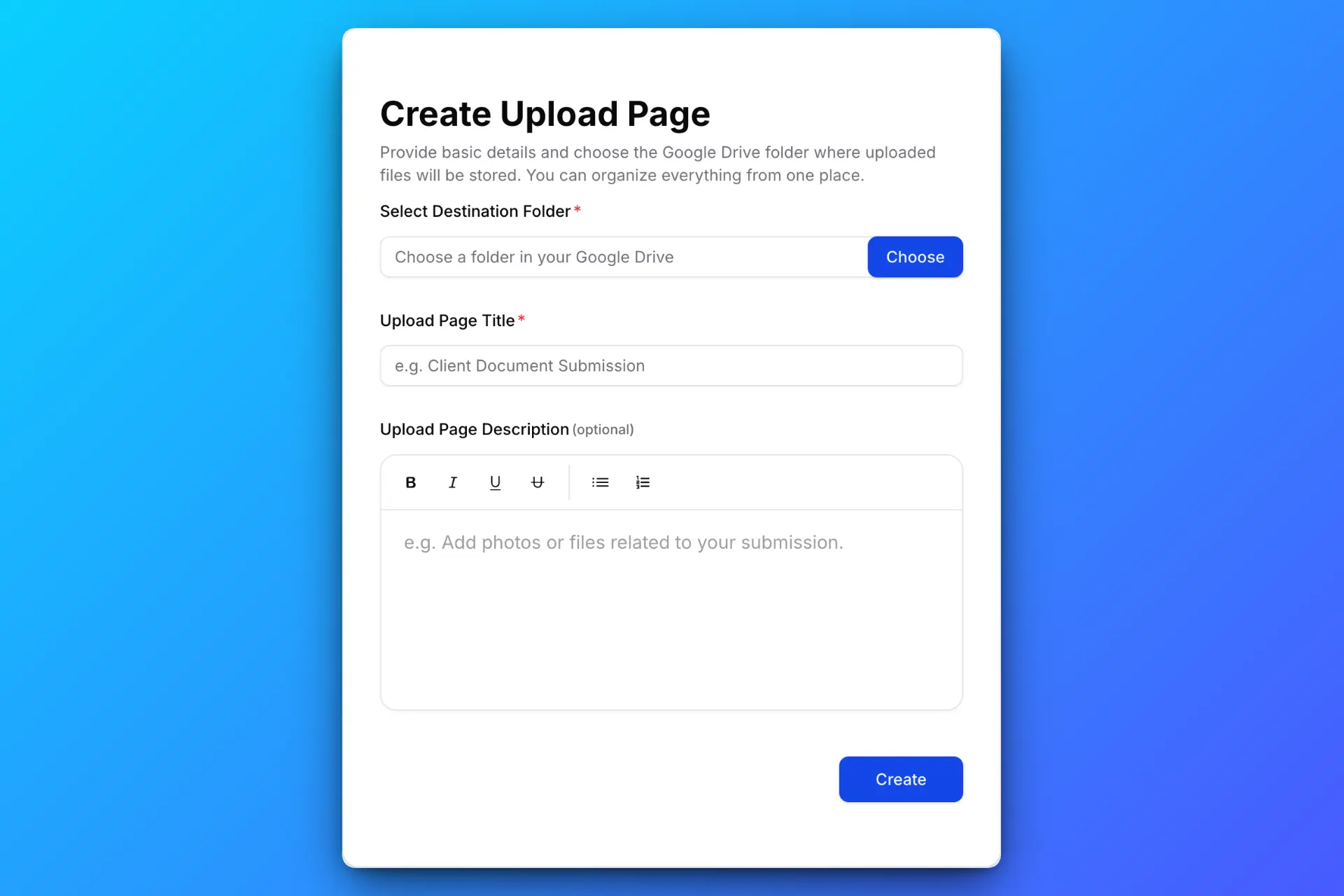
Create an upload page with a clear title and description so users know what to upload.
Select a destination folder in your Google Drive and configure upload rules.
Share a Single Upload Link

Share the link publicly or privately. Anyone with the link can upload files—no account required.
Optional: Add Password Protection
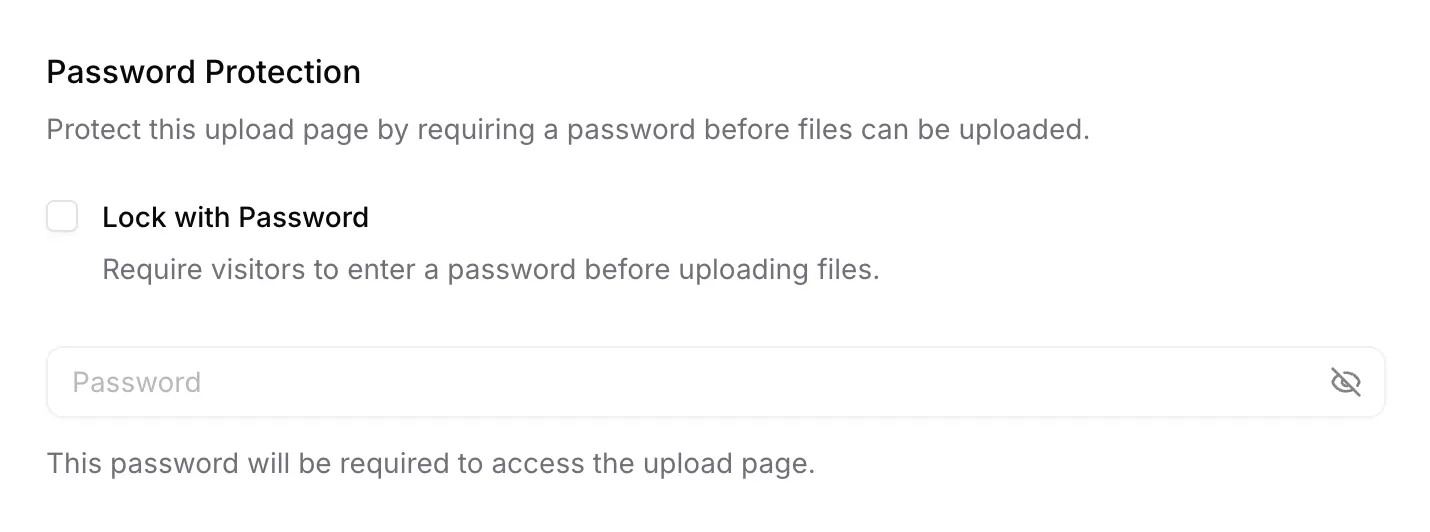
For added control, enable password protection.
Only users with the password can access the upload form, even though uploads remain anonymous.
Files Are Uploaded Securely
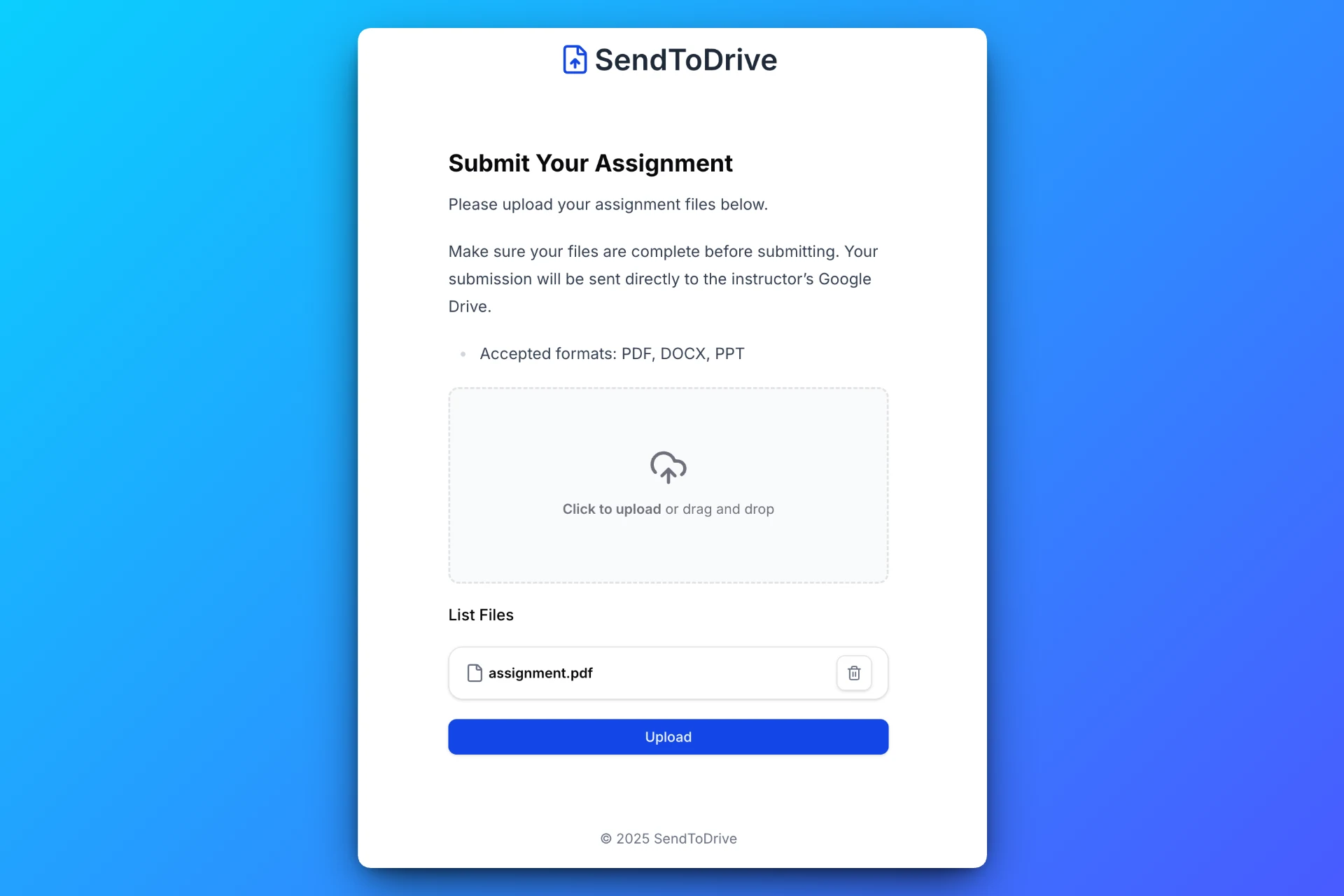
Users see a clean upload interface. They can upload files but cannot view existing uploads or your Google Drive.
Files Go Straight to Google Drive
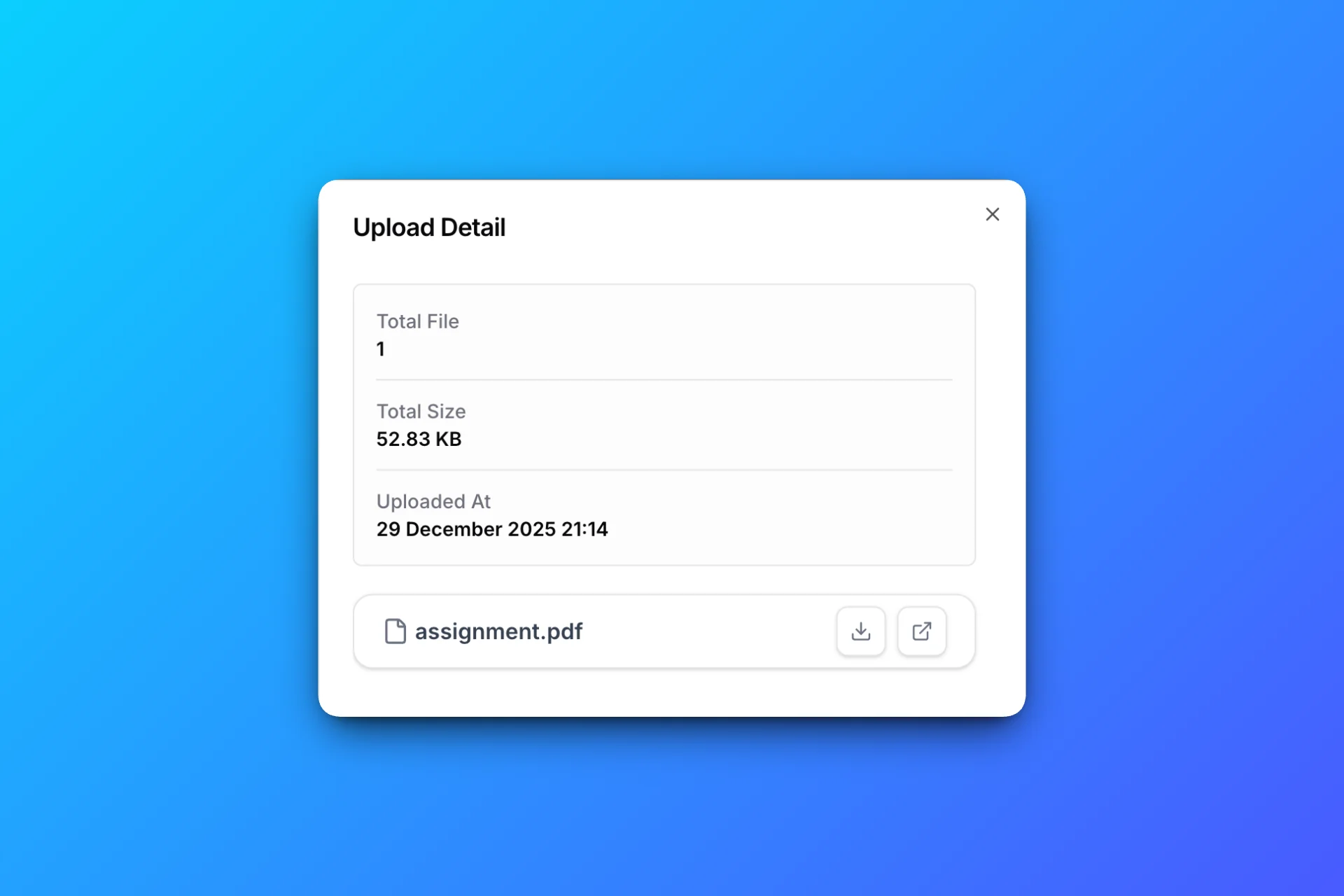
All files are saved automatically in your selected Google Drive folder—organized and ready for review.
Real-World Use Cases for Anonymous File Upload
Here are practical examples where anonymity adds value:
Journalism & Media
Sources submit documents without revealing identity.
HR & Internal Reporting
Employees share files anonymously for internal investigations.
Education
Students submit feedback or reports without pressure.
Nonprofits & Communities
Collect documents or evidence from the public safely.
Events & Campaigns
Accept files quickly without onboarding barriers.
Why SendToDrive Is a Safe Way to Handle Anonymous Uploads
SendToDrive is designed for simple, controlled file collection:
- Anonymous uploads without login
- Files go directly to your Google Drive
- Optional password protection
- Upload limits and expiration
- Clean, focused upload experience
Your storage stays private. Uploaders stay anonymous.
Frequently Asked Questions
Can I identify who uploaded a file?
Anonymous upload means identity is not required. If you need identification, consider adding optional form fields or using authenticated uploads.
Is anonymous upload risky?
Not if configured correctly. File restrictions, passwords, and private storage keep uploads secure.
Can I disable uploads anytime?
Yes. Upload pages can be disabled or expired instantly.
Do uploaders see other files?
No. Uploaders can only upload files—not view or download anything else.
Final Thoughts
Anonymous file upload is not about losing control—it’s about removing friction. When identity isn’t essential, allowing people to upload files without login leads to higher participation and faster results.
👉 Try SendToDrive and collect files anonymously with confidence.