File Upload Page for Clients: Best Practices
Best practices for creating a professional file upload page for clients, so you can collect documents securely and without friction.
Collecting files from clients is part of the day-to-day operations of many founders, educators, and small businesses. The challenge is not the request itself, but the process behind it. A poorly designed system can lead to lost attachments, confused users, and security risks.
A professional file upload page for clients should make submitting files simple for clients and keeping everything organised easier for you.
Why Email and Shared Folders Are Not Enough
Traditional approaches usually rely on email attachments or public shared folders. Both methods come with serious limitations.
Common issues include:
- Email providers blocking large attachments
- Files getting buried in long email threads
- Clients uploading files to the wrong shared folder
- Having to manage access permissions manually
- Sensitive documents becoming visible to other people
These problems waste time and reduce trust.
Characteristics of a Good File Upload Page for Clients
An effective file upload page focuses on simplicity and privacy.
It should provide:
- A single upload link
- No login requirement
- Clear upload instructions
- A mobile-friendly interface
- Direct delivery to your storage
When these elements are in place, clients are more likely to complete uploads quickly.
Step-by-Step: Creating the Right Upload Experience
Create Your Upload Page in SendToDrive
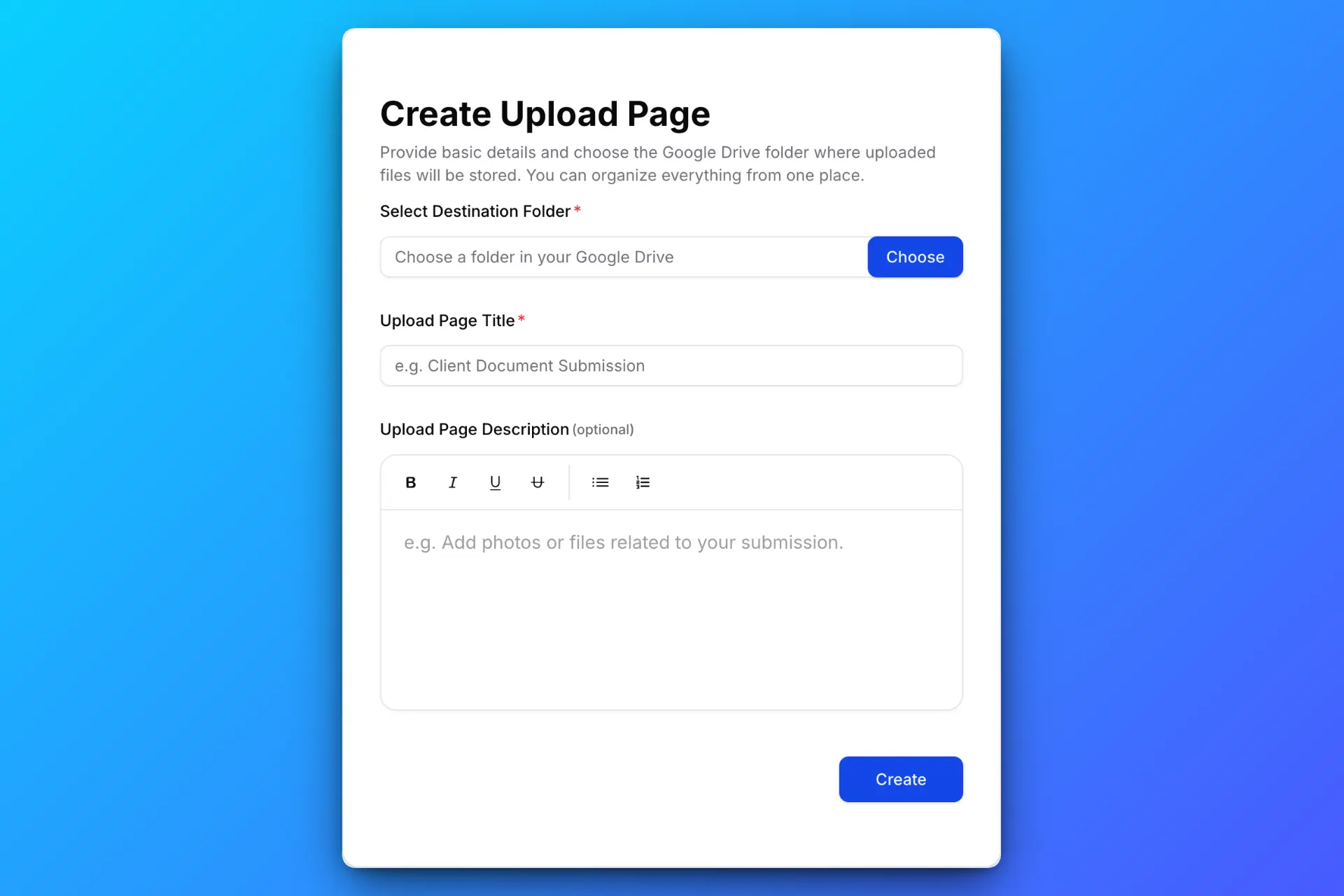
Start in SendToDrive by creating a dedicated upload page. Add a clear title and description so clients know exactly which files you need. Select the Google Drive folder where submissions should be saved.
You can also configure:
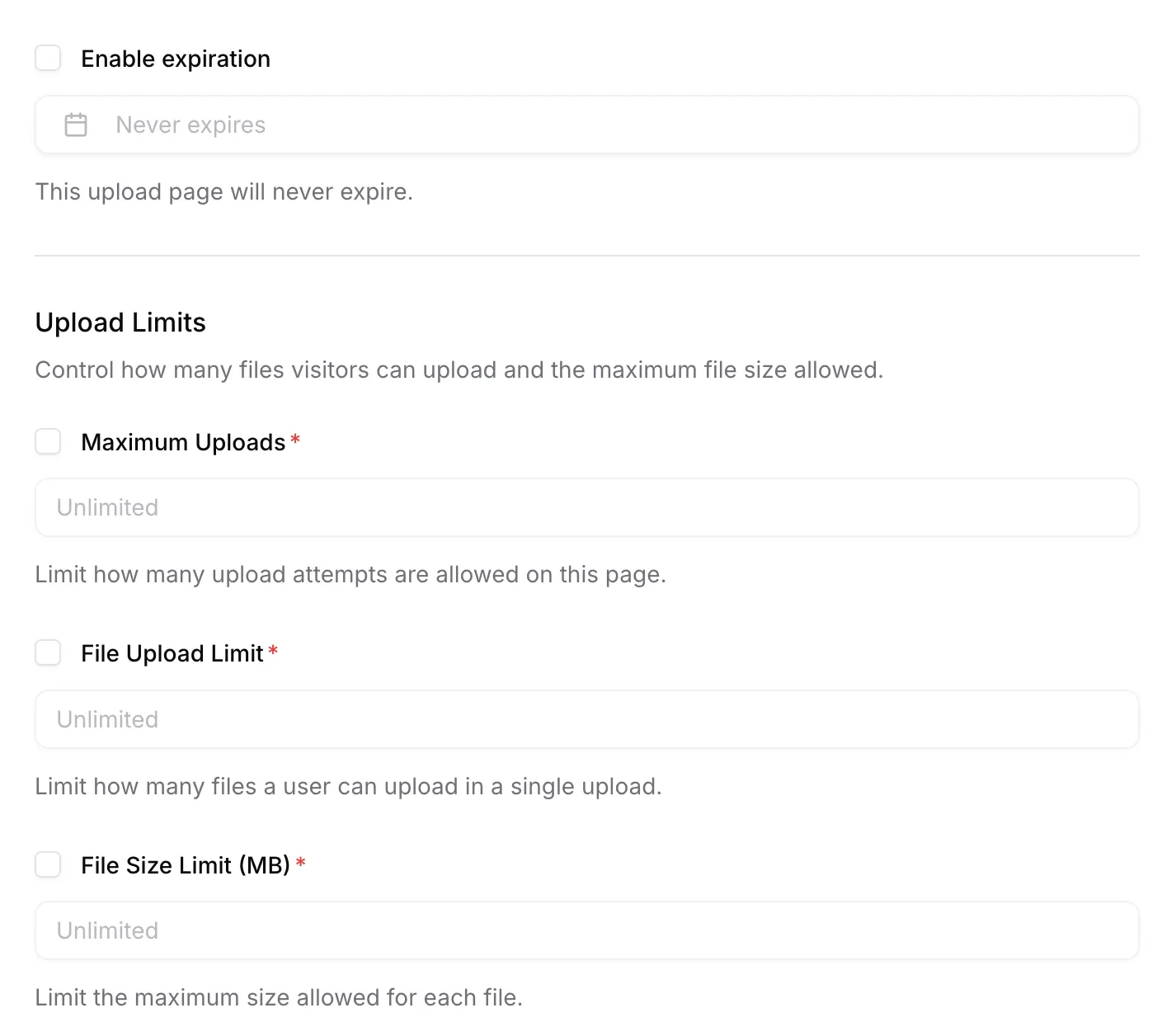
- Maximum file size
- Allowed file types
- Expiry dates
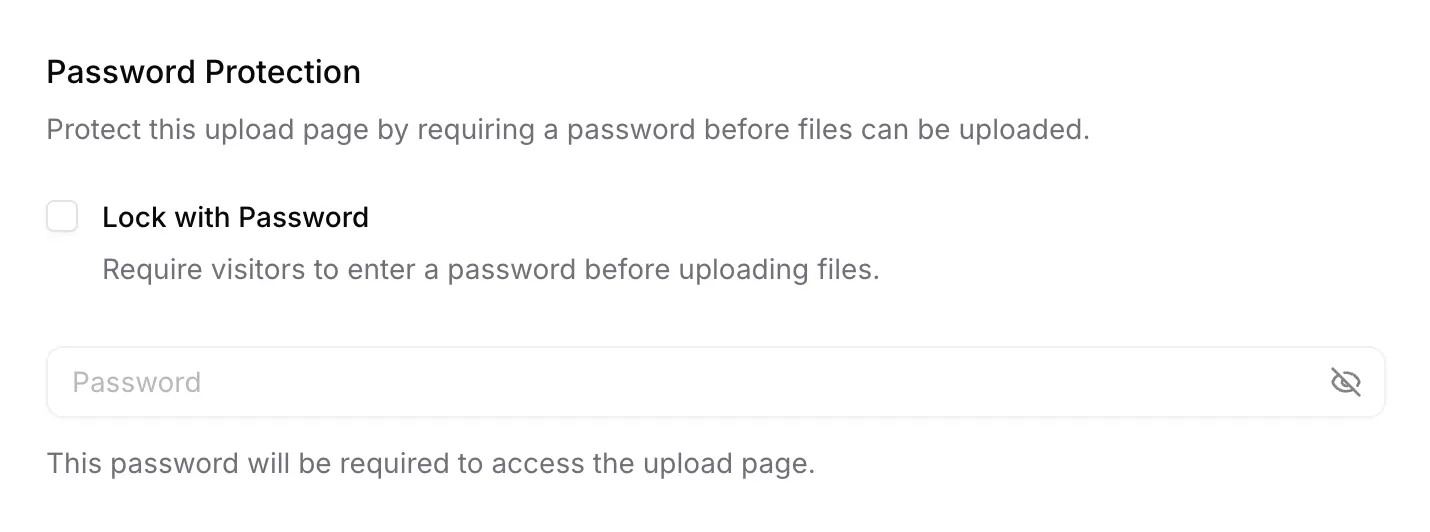
For confidential projects, enable password protection.
Share the Link Instead of Access

Send the generated link to your clients through any channel. They never gain access to your Google Drive — only to the upload interface.
Clients Upload Files Securely
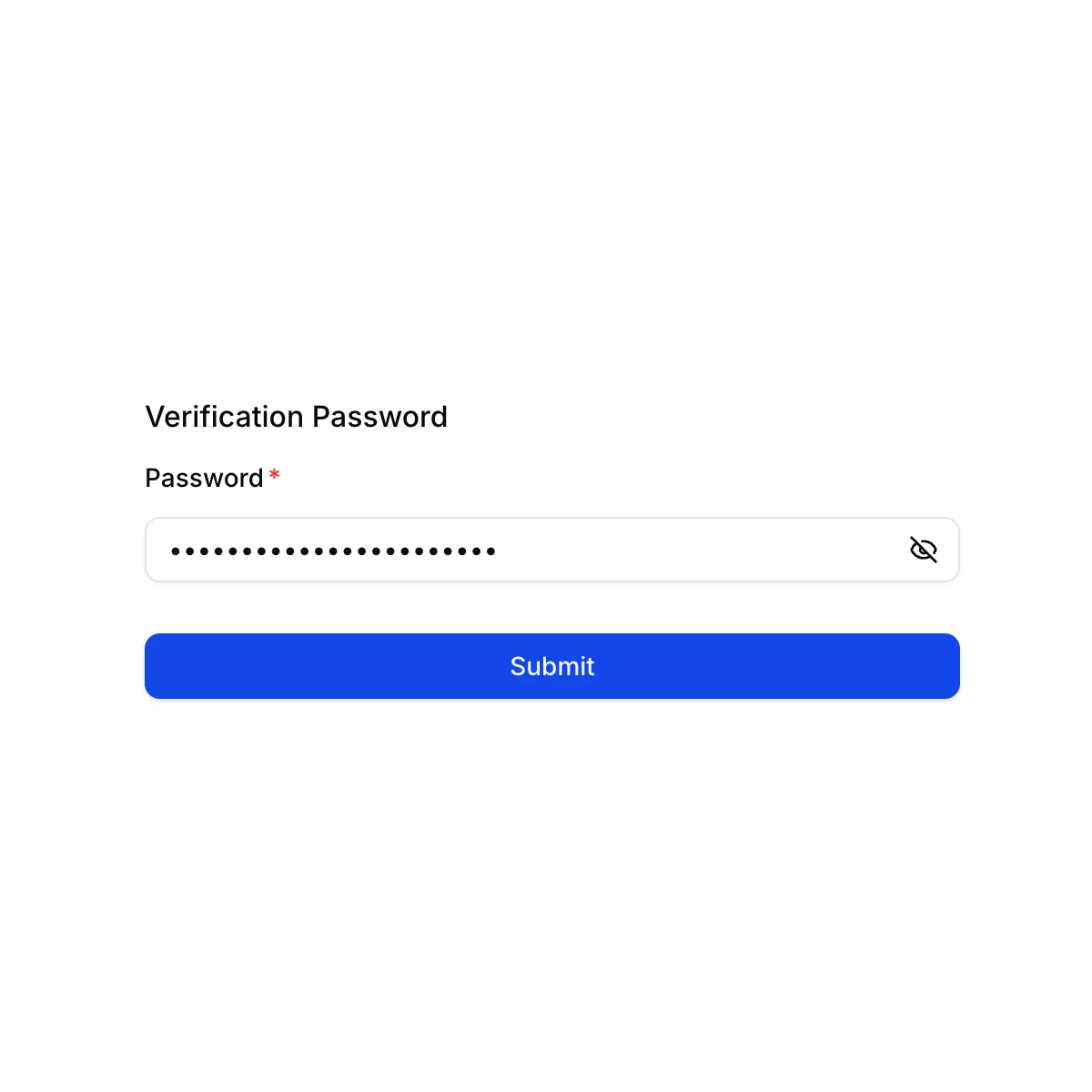
If password protection is enabled, clients must enter the correct password before they can view the form.
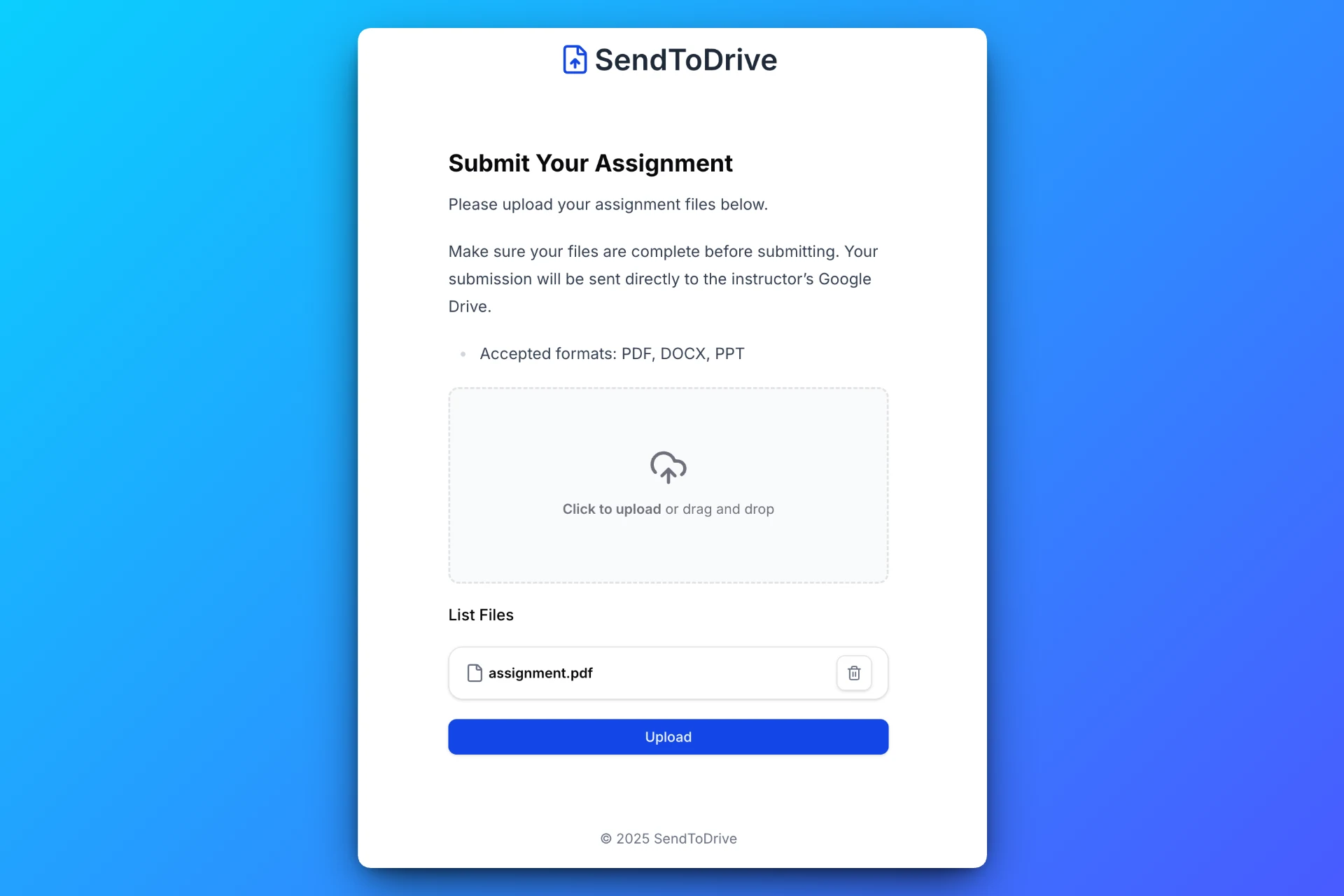
After that, they can upload files using a simple and straightforward interface.
Files Arrive Organised
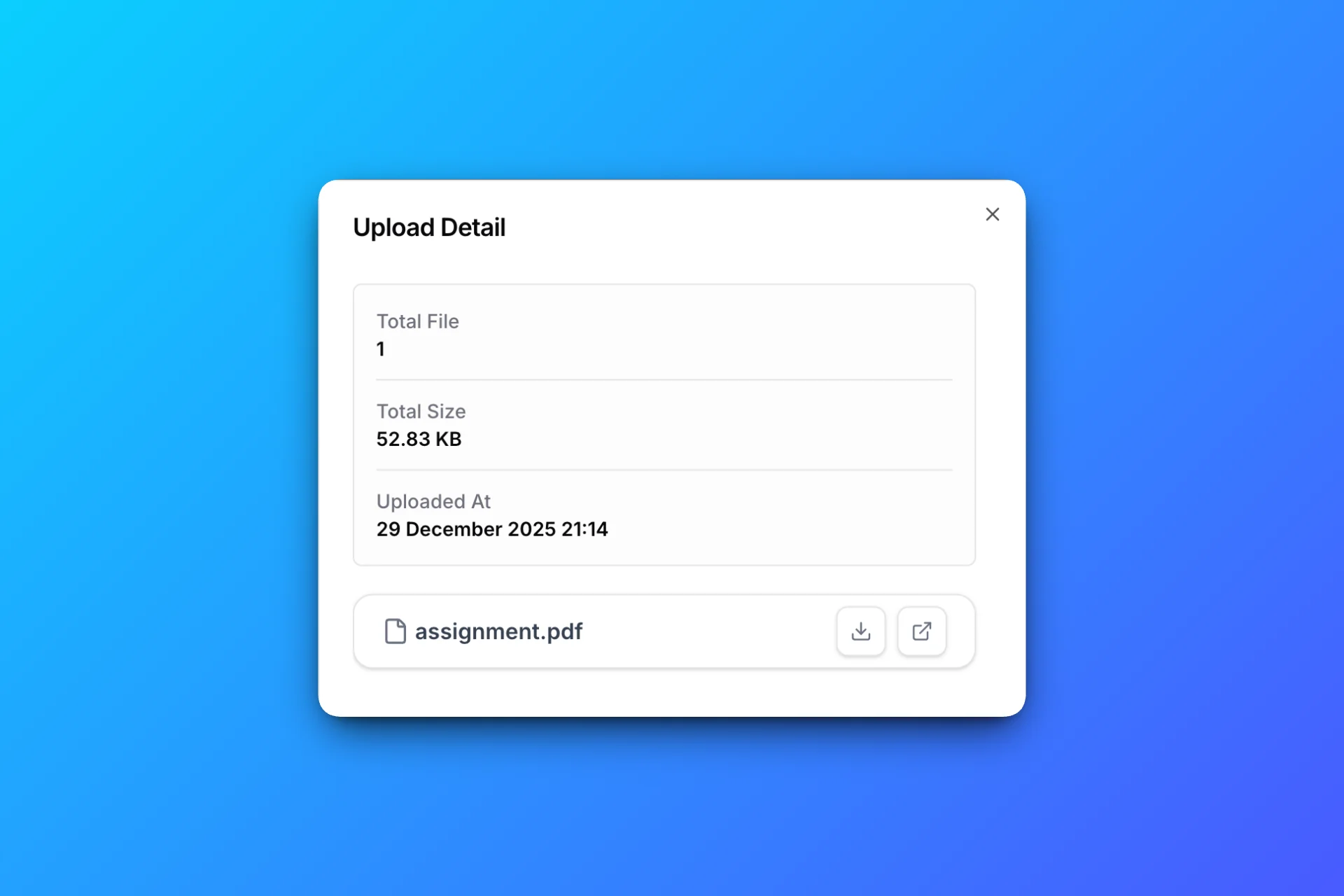
All files are delivered directly into your chosen Google Drive folder, organised and ready to use.
Common Use Cases
Education
Teachers can receive assignments and forms from students without requiring them to use Google accounts.
Estate Agency
Estate agents can collect contracts, identity documents, and photos privately from buyers and sellers.
Religious Organisations
Community organisers can collect event registrations or donation confirmations through a protected upload page.
Security Considerations
A secure file upload page should always protect:
- Access to your internal storage
- Existing files from being viewed
- Links from misuse
- Data during transfer
Password-protected links add an additional layer of control when needed.
Why SendToDrive Fits These Best Practices
SendToDrive helps founders, educators, and small businesses implement all of these practices without writing code.
It provides:
- Fast setup
- Secure link-based uploads
- Google Drive integration
- Optional password protection
- Upload limits
- No technical onboarding for clients
This makes it an ideal solution for anyone needing a professional file collection system.
FAQs
What makes a file upload page truly “best practice”?
It should allow external users to upload files without giving them access to your Google Drive.
Do uploaders need to log in?
No. SendToDrive works entirely without logins.
Can I restrict uploads?
Yes. You can set limits on file sizes and file types.
Is password protection supported?
Yes. You can enable password-protected upload links.
Final Thoughts
A well-designed file upload page for clients improves workflows and helps build professional trust. Focus on link-based file collection, privacy, and automatic organisation.
👉 Try SendToDrive to create secure upload links in minutes.